
What is a safari in a conservancy - and why it's different from a safari in a National Park
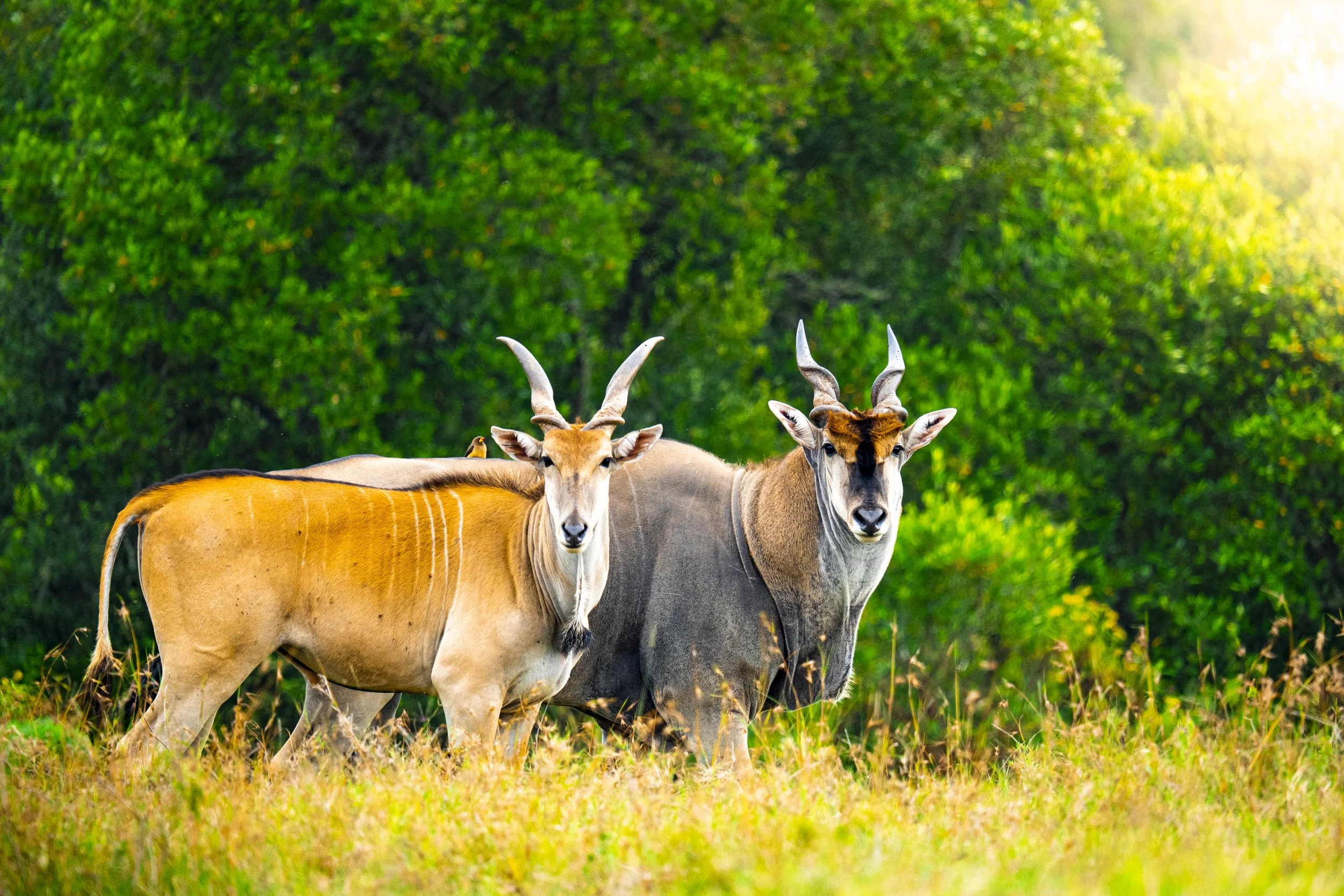
If you've started researching a Kenya safari, you've probably come across the word ‘conservancy’ without anyone clearly explaining what it means or why it matters. Most safari content focuses on the national parks - the Masai Mara, Amboseli, Tsavo - because they're famous and easy to write about. Conservancies are less well known, considerably less visited, and in many respects offer a more rewarding experience. This is what you need to know before you decide.
What Is a Wildlife Conservancy?
A wildlife conservancy in Kenya is a privately owned or community-owned area of land that has been set aside for wildlife and conservation rather than agriculture or development. Unlike a national park, which is government-owned and managed by the Kenya Wildlife Service and Kenyan government, a conservancy is run independently - by a private family, a trust or a local community, depending on the model.
The wildlife moves freely across it. And crucially, the number of visitors, camps and vehicles is controlled by the conservancy itself rather than by a national ticketing system.
In Laikipia - the county in Northern Kenya that contains the Lolldaiga Hills, where Moon's Camp is based - conservancies cover a significant proportion of the land. Laikipia is one of Kenya's most important wildlife regions precisely because of this conservancy model: large, unfenced, privately managed landscapes that allow wildlife to move naturally across terrain that might otherwise have been converted to farmland.
How Is a Conservancy Safari Different from a National Park Safari?
The differences are substantial and worth understanding as you start to plan your safari journey.
Fewer vehicles, fewer guests
In the Masai Mara during peak season, a lion sighting can attract fifteen or twenty vehicles simultaneously. Each car jostles for position, engines running, guides calling on the radio. It's an extraordinary spectacle - but it's a managed one, shaped as much by logistics as by wildlife behaviour.
In a private conservancy like Lolldaiga Hills, there are so few other cars or guests. On a typical game drive at Moon's Camp, you will see and interact with few others. So that means when you find a leopard, or follow a lion pride at sunrise, it is your sighting entirely.
More freedom in how you experience the wildlife
National parks in Kenya have strict rules about where vehicles can go, when they can drive, and what activities are permitted. Off-road driving is generally prohibited. Walking safaris are restricted or unavailable in most parks. Night drives are not permitted.
In a private conservancy, the rules are set by the landowner. At Moon's Camp in Lolldaiga Hills, guests can take guided walking safaris through terrain that vehicles cannot reach. Night drives go out after dark, when the conservancy changes character entirely. Fly camping takes guests overnight into the bush. Horse riding is available across open plains. The experience is shaped by what the guest wants to do, not by what a national park management framework permits.
A direct connection between your stay and conservation
When you pay a national park entry fee in Kenya, the money goes to the Kenya Wildlife Service and is distributed across the national system.
In a private conservancy, the economics work differently. The revenue from each guest stay funds the conservancy directly - the anti-poaching effort, the wildlife monitoring, the community programmes, the staff salaries. At Moon's Camp, a community fee of $10 per person per night goes directly to the communities bordering the Lolldaiga Hills conservancy, funding school meals programmes, community health days and conservation education. Every guest can see exactly where their money goes because the owners are present and the reporting is transparent.
A more personal experience
National parks process millions of visitors a year. The infrastructure - the gates, the rangers, the designated picnic sites - is designed for volume. The experience is necessarily impersonal.
A private conservancy camp like Moon's Camp accommodates a maximum of sixteen guests at any one time. The owners are present. The guides know the conservancy intimately, having tracked individual animals across the same terrain for years. James, one of Moon's Camp's lead guides, knows the lion pride by individual animal. He knows which kopje the leopard favours in the rainy season, which valley the elephant herd moves through at dawn. That knowledge cannot be replicated at scale.
What Wildlife Can You See in a Laikipia Conservancy?
Laikipia's conservancies collectively support one of Kenya's most diverse wildlife populations - and one that is notably different from what you'll find in the southern parks.
The Lolldaiga Hills conservancy is home to four of the Big Five: lion, leopard, elephant and buffalo. But the species that make Laikipia genuinely distinctive are the ones you won't reliably find in the Masai Mara:
Grevy's zebra - the world's largest wild equid and one of its most endangered. Laikipia is one of the last strongholds for this species, with a global population of fewer than 3,000 animals. Lolldaiga has a resident population. They are seen on most game drives.
Reticulated giraffe - found only in Northern Kenya, with bold, clearly defined markings that distinguish them immediately from the Masai giraffe of the south. A daily sighting at Moon's Camp.
Cheetah - present in Lolldaiga and seen regularly in the open grassland sections, particularly in the early morning.
Striped hyena - nocturnal and rarely seen even by experienced safari-goers, but present in the conservancy and occasionally encountered on night drives.
Gerenuk - the long-necked antelope that feeds standing upright on its hind legs, reaching into acacia branches. A species most visitors to Kenya's southern parks never see.
Aardwolf - a small, termite-eating member of the hyena family, almost entirely nocturnal and genuinely rare to encounter. Present in Lolldaiga.
Over 425+ bird species have been recorded in the Lolldaiga Hills conservancy, including secretary bird, martial eagle, Verreaux's eagle, Abyssinian ground hornbill and lilac-breasted roller.
Is a Conservancy Safari Right for You?
A conservancy safari suits a particular kind of traveller. If what you want is the wildebeest migration in its full dramatic scale, the Masai Mara in July or August is the right choice and nothing else quite replicates it. But if what you want is genuine wilderness, wildlife encounters without other vehicles, the freedom to walk and drive and camp on your own terms, and a direct relationship with the people and the land you're visiting - a private conservancy is almost certainly the better answer.
Laikipia is one of the finest conservancy destinations in Africa. The Lolldaiga Hills conservancy, where Moon's Camp sits, covers a huge area of varied terrain - cedar forest, open plains, rocky hillsides, seasonal rivers - and remains genuinely, deliberately under the radar. Very few people have heard of it. Fewer still have visited. That is, for the guests who do come, a significant part of the point.
Visiting Moon's Camp in the Lolldaiga Hills Conservancy
Moon's Camp accommodates up to sixteen guests across six tents - four standard tents and two family tents - and can be booked individually or taken exclusively. Owners Moon and Ed are present throughout every stay. Guided walks, night drives, fly camping, horse riding and cultural community visits are all available.
To discuss dates or availability, get in touch directly on our contact page.
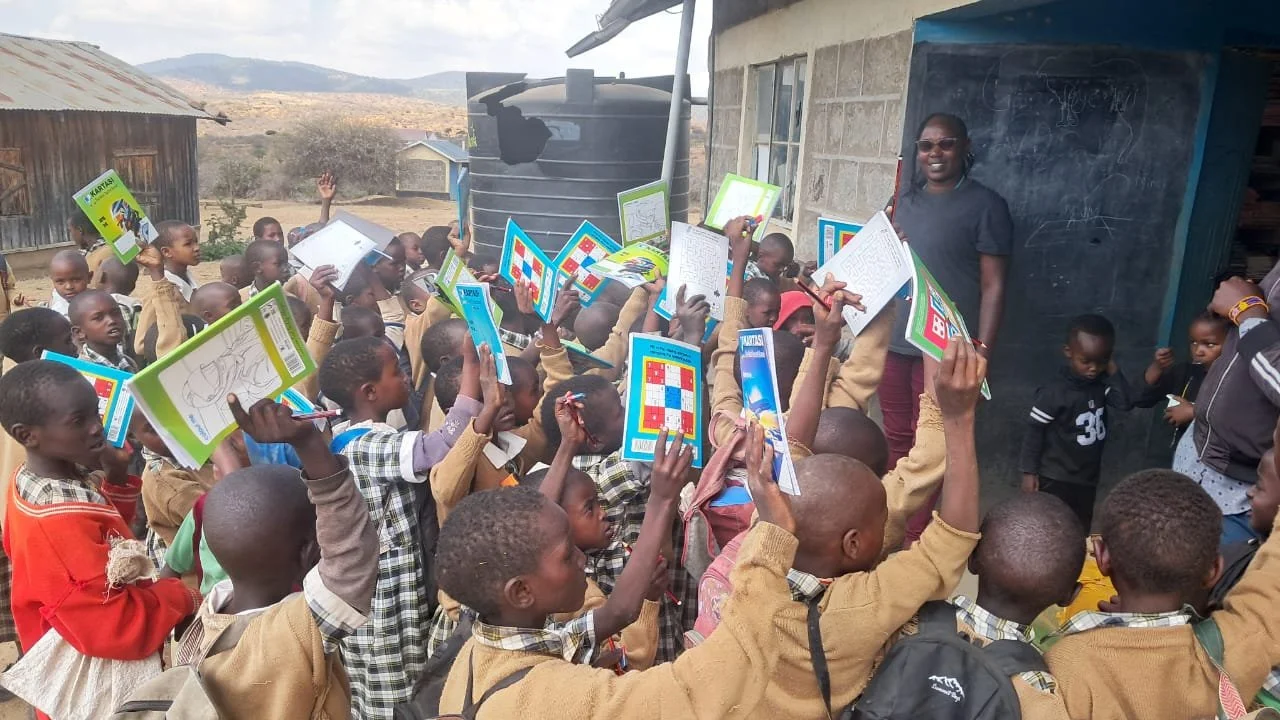
Exercise books purchased by Moon’s Camp for Makurian Primary School children