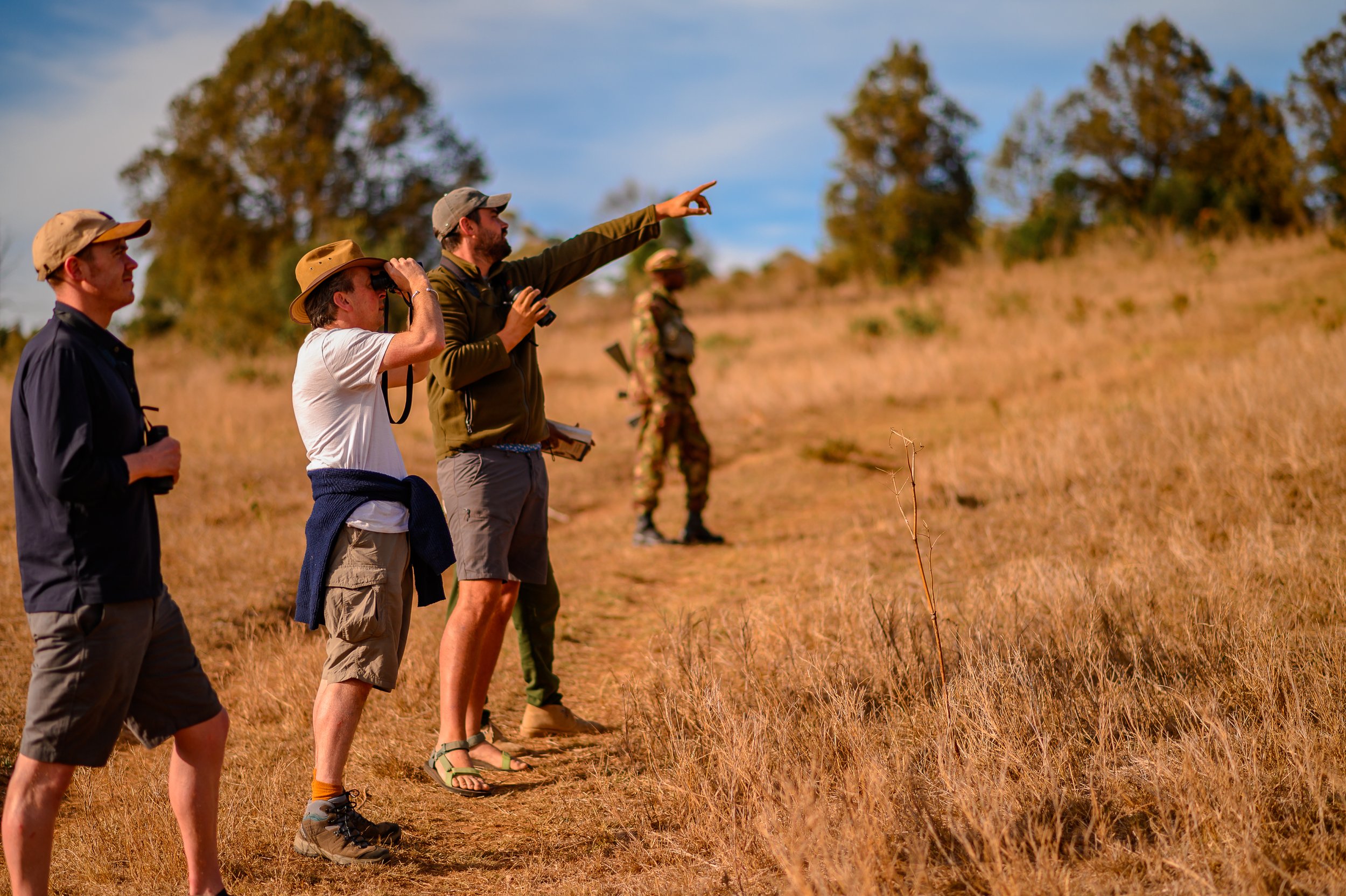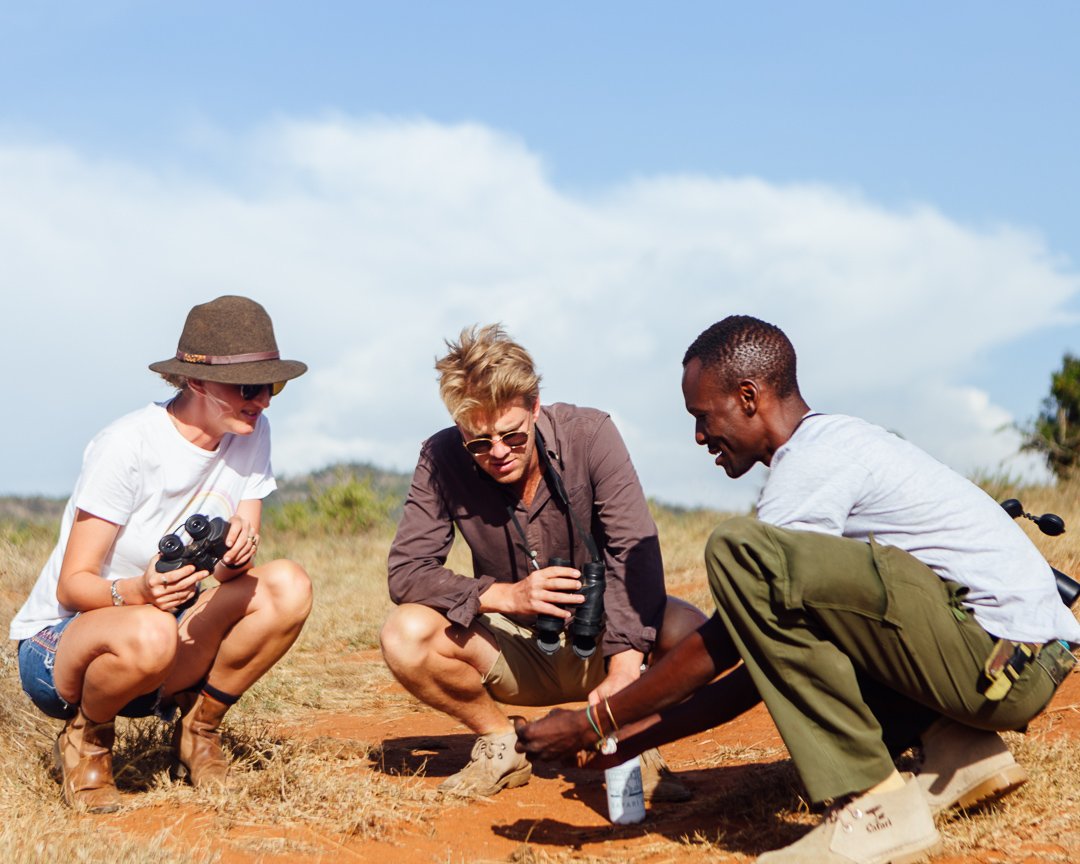
A walking safari changes how you understand the bush. From a vehicle you watch wildlife. On foot you become part of the landscape, and the things that matter shift. A set of tracks in the dust becomes a story. A pile of dung tells you who passed at dawn. An elephant at two hundred metres is a very different experience from an elephant at two hundred metres from the safety of a Land Rover.
Most of Kenya’s national parks do not permit walking safaris at all. Laikipia is one of the few regions where they are a normal part of a stay, and this is a guide to what that involves.
Why walking safaris are possible in Laikipia
Kenya’s national parks and reserves are managed by the Kenya Wildlife Service, and visitors are generally required to stay inside vehicles. Laikipia works differently. Much of the county is made up of privately owned conservancies and community land, where the landowner sets the rules. Lolldaiga Hills is something different; quiet, wild and offers the chance to walk with an armed ranger. That means guided walking can take place across open plains, rocky hillsides and cedar forest without crowds, and without a rigid itinerary.
Walks at Moon’s Camp are led by experienced Kenyan guides who know the conservancy in detail, including where the elephant herds tend to move at different times of day, which ridges the leopards favour, and which areas are best avoided on a given morning. Every walk is planned around current wildlife movements rather than a fixed route.
What a walk is actually like
A typical morning walk starts early, while the air is cool and the light is low. You set off from camp or from a point reached by vehicle, with a guide at the front and usually a second team member at the back. The pace is slow. Walking safaris are not about covering distance, and a two or three hour walk may only cover a few kilometres, because the guide stops often to show you something.
What you see depends on the day, but the small things are a large part of the appeal. Tracking is one: identifying which animal passed, how long ago, and in which direction. Birds are another, with 425 species recorded in the conservancy, including secretary birds on the open plains and Verreaux’s eagles along the rocky ridgelines. Plants, insects, termite mounds and the signs of nocturnal animals all get attention, and guests who think of safari as being about big predators often find the details more absorbing than they expected.
Larger animals do appear. Elephant, buffalo, giraffe, zebra and plains game are all seen on foot in Lolldaiga, and the reticulated giraffe and Grevy’s zebra are particularly memorable at walking distance. Guides read the behaviour of every animal and keep a safe distance, and the briefing before each walk covers exactly how the group should move and what to do if the guide gives a signal.
Is it safe?
This is the question most people ask first, and it deserves a straight answer. Walking in the bush carries more risk than driving through it, and the safety of a walk depends almost entirely on the quality of the guide. At Moon’s Camp, armed wildlife rangers and our guides brief guests before every walk, choose routes with current wildlife activity in mind, and will change or cancel a plan if conditions are feel like they have changed. Guests are asked to stay together, walk quietly and follow instructions without hesitation. Dangerous game is not approached.
If you have concerns about your own fitness, mobility or nerves, tell us before you arrive. Walks can be shortened, slowed down or replaced with a vehicle outing, and nobody is expected to take part in anything they are uncomfortable with.
Who walking safaris suit
Most reasonably active people can manage a walking safari. The terrain in Lolldaiga includes some hills and uneven ground, but you do not need to be an athlete. Comfortable closed shoes, neutral coloured clothing, a hat, sunscreen and a water bottle are the essentials. Children can take part in age-appropriate walks, often focused on tracks, insects and plants rather than large game, and guides at Moon’s Camp adapt the activity to the group.
Keen photographers, birdwatchers and anyone who finds game drives too passive tend to enjoy walking most. If you have a particular interest, such as tracking, botany or birds, mention it when you book and the guides can build it into your days.
Walking combined with other activities
Walking is only one option at Moon’s Camp. Guests also take game drives in classic Series I and II Land Rovers, night drives, horse riding across the open plains and cave visits to see ancient rock art. For those who want to go further into the wilderness, fly camping takes the group out for a night in a simple bush camp, usually reached on foot or by vehicle, with sleeping arrangements under canvas and a fire for cooking. Many guests combine a morning walk with an afternoon game drive, which gives a good balance of slow observation and wider coverage.
When to go
Walks run throughout the year, but conditions vary. The dry months from July to October and January to February offer the clearest visibility and most predictable wildlife movement, with animals gathering around permanent water. July and August are cool, which suits longer walks. During the long rains from March to May, vegetation is thicker and some routes are affected, though walks are still possible on drier days and the birdlife is excellent. A fuller month by month breakdown is in our guide to the best time to visit Northern Kenya.
Read more about seasons and timings in our blog post.
Planning a walking safari at Moon’s Camp
Moon’s Camp sleeps up to 16 guests across six tents, including two family tents, and can be booked individually or exclusively. The camp is owner-managed, and we host guests ourselves, so planning a stay that includes walking is a conversation rather than a booking form. Tell us your dates, your group and what you hope to see, and we will suggest how many nights to allow and how to arrange the days.