
What Wildlife Can You See in Laikipia, Kenya? A Guide to the Lolldaiga Hills Conservancy
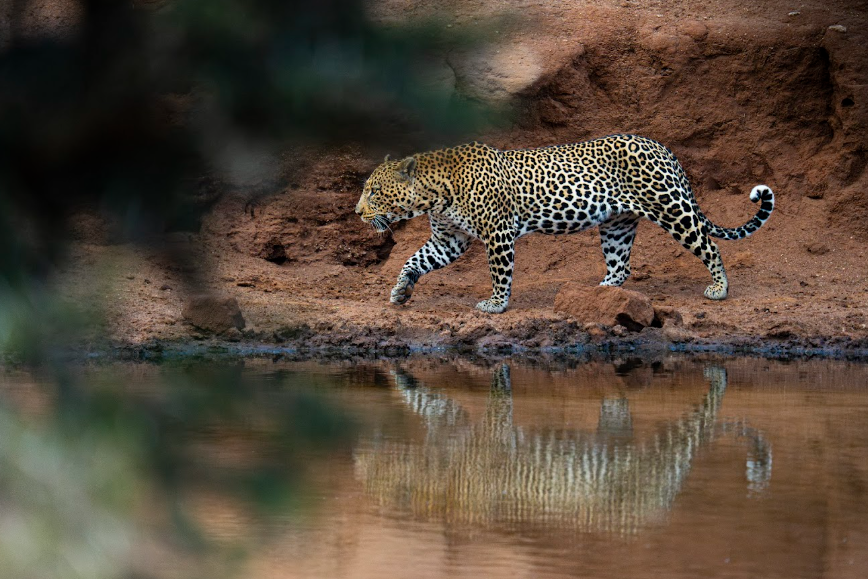
Silent and beautiful: a leopard and his reflection
Most people planning a Kenya safari think first of the Masai Mara - the vast open plains, the migration, the tourist convoys following radio calls between vehicles. Laikipia is a different Kenya entirely. A criss-cross of private conservancies and community land in the north of the country, it sees a fraction of the visitor numbers of the southern parks and the wildlife experience reflects that. In Lolldaiga Hills, where Moon's Camp sits, it is entirely normal to spend a full day on safari without seeing another vehicle.
The Lolldaiga Hills conservancy covers vast tracks of private land - cedar forest, open plains, rocky hillsides, seasonal rivers and a permanent watering hole overlooked by the camp. Four distinct ecosystems in one property, and the wildlife moves freely between all of them.
The Big Four
Lolldaiga is home to four of the Big Five. Lion, leopard, elephant and buffalo are all resident in the conservancy. Rhino are not present in Lolldaiga - yet - but the four that are here are seen regularly and on genuinely wild terms.
Lion are perhaps the most consistently seen of the four. The Lolldaiga prides have been tracked by our guides for years and individual animals are well known. Leopard are sighted regularly, particularly on rocky outcrops and in the cedar forest sections of the conservancy, though as anywhere they operate on their own schedule. Elephant are a near-daily presence at the watering hole and throughout the plains, and the herd dynamics in Lolldaiga - including young calves and older bulls moving through on their own - make for extended, unhurried sightings. Buffalo are found in the open grassland sections and occasionally pass through camp in the early morning.
The absence of radio coordination between vehicles means that when you find any of these animals, you find them alone.
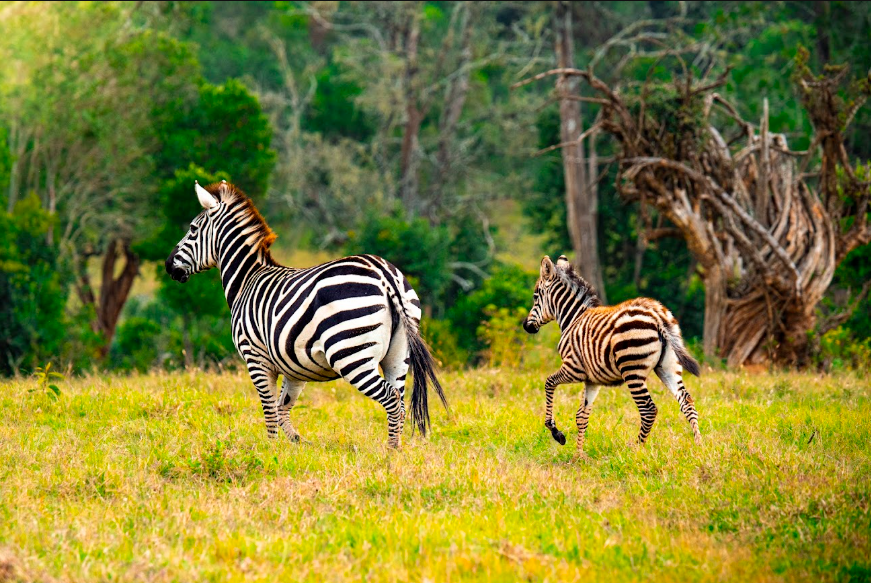
While a Grevy zebra is an exciting sighting, there is nothing wrong with a Common zebra as well!
Grevy's Zebra
For many guests, the Grevy's zebra is the unexpected highlight of a Lolldaiga Hills safari. Laikipia is one of the last remaining places you can find for this species - classified as endangered, with a global population of fewer than 1,850 animals - and the contrast with the common plains zebra is immediately striking. Grevy's are larger, with much narrower stripes, large rounded ears and a white belly. They tend to be found in smaller groups than plains zebra and often in drier, more open terrain.
Seeing them alongside reticulated giraffe and plains game on the same morning is a reminder that Laikipia is doing something ecologically important that the more visited parks in Kenya are not.
Reticulated Giraffe
The reticulated giraffe is found only in Northern Kenya - Laikipia, Samburu and the areas north of Mt. Kenya. It is a distinct species from the Masai giraffe that most safari visitors encounter in the south, with bold, clearly defined chestnut patches separated by bright white lines, giving the coat its net-like appearance. The Lolldaiga population is healthy and sightings are a daily occurrence.
There is something particular about watching reticulated giraffe move through cedar forest or silhouetted against Mt. Kenya at dusk. It is one of those images that stays.
Cheetah
Cheetah are present in the conservancy though sightings are less predictable than lion or elephant. Open grassland sections offer the best chance, particularly in the early morning. When they are found, the lack of other vehicles means the sighting is yours entirely - no jostling for position, no engines running alongside yours. Our guides know the terrain well enough to position for the best light and the most patient watching.
Striped Hyena
The striped hyena is nocturnal, solitary and rarely seen even by experienced safari-goers. Lolldaiga Hills has a resident population, and night drives occasionally produce sightings - a pair of eyes in the torchlight, the distinctive striped coat briefly visible before it moves back into the dark. For guests who take their wildlife seriously, an encounter with a striped hyena is the kind of sighting that doesn't appear in a standard Kenya itinerary.
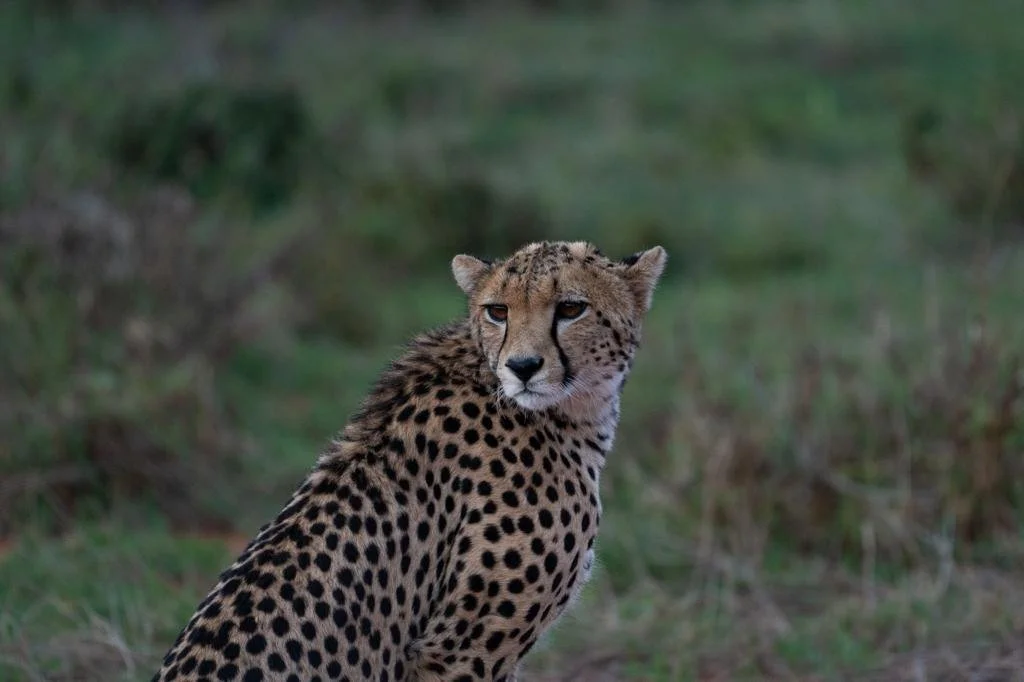
A beautiful cheetah surveys her Hills
Birds
Over 420 bird species have been recorded in the Lolldaiga Hills conservancy. The conservancy's range of habitats - forest, open grassland, rocky hillside, wetland - means the list is unusually varied for a single property. Secretary birds walk the open plains in the morning. Verreaux's eagles patrol the rocky ridgelines. Abyssinian ground hornbills move through the grassland in small groups. The lilac-breasted roller is everywhere, and never quite loses its ability to stop a vehicle.
Dedicated birders may want to allow a specific morning for the forest sections, where the species list shifts entirely.
After Dark
The conservancy changes character on night drives. Bushbabies appear in the acacia canopy. Porcupine cross the tracks. Genet and civet are regular sightings in the woodland sections. Aardvark are occasionally seen - one of the more elusive mammals on any African species list - and the striped hyena, mentioned above, is almost exclusively a nocturnal encounter.
Night drives in Lolldaiga are conducted in open Land Rovers with a handheld spotlight. They cover different terrain from the day drives and consistently produce sightings that guests don't expect.
Best Time to Visit
The dry seasons - July to October and January to February - offer the most concentrated wildlife viewing, as animals gather around permanent water sources and the vegetation thins. The long rains (April to June) bring lush green landscapes and newborn animals but can make some tracks difficult. The short rains (November) are usually brief and don't significantly affect game viewing.
Lolldaiga is a year-round destination. The wildlife doesn't leave.
Staying at Moon's Camp
The camp's permanent watering hole means that wildlife viewing begins before breakfast and continues after dinner, from your tent or from the mess tent veranda. Game drives go out twice daily in classic Series I and II Land Rovers, guided by our guides, all of whom have spent years learning this specific conservancy. Walking safaris cover terrain that vehicles can't reach. Fly camping takes guests overnight into the bush entirely.
If you'd like to discuss dates or availability, get in touch directly at reservations@safari-series.com - or visit our contact page to start planning.
With thanks to Jack Godwin & Joaquin Telesca for photos