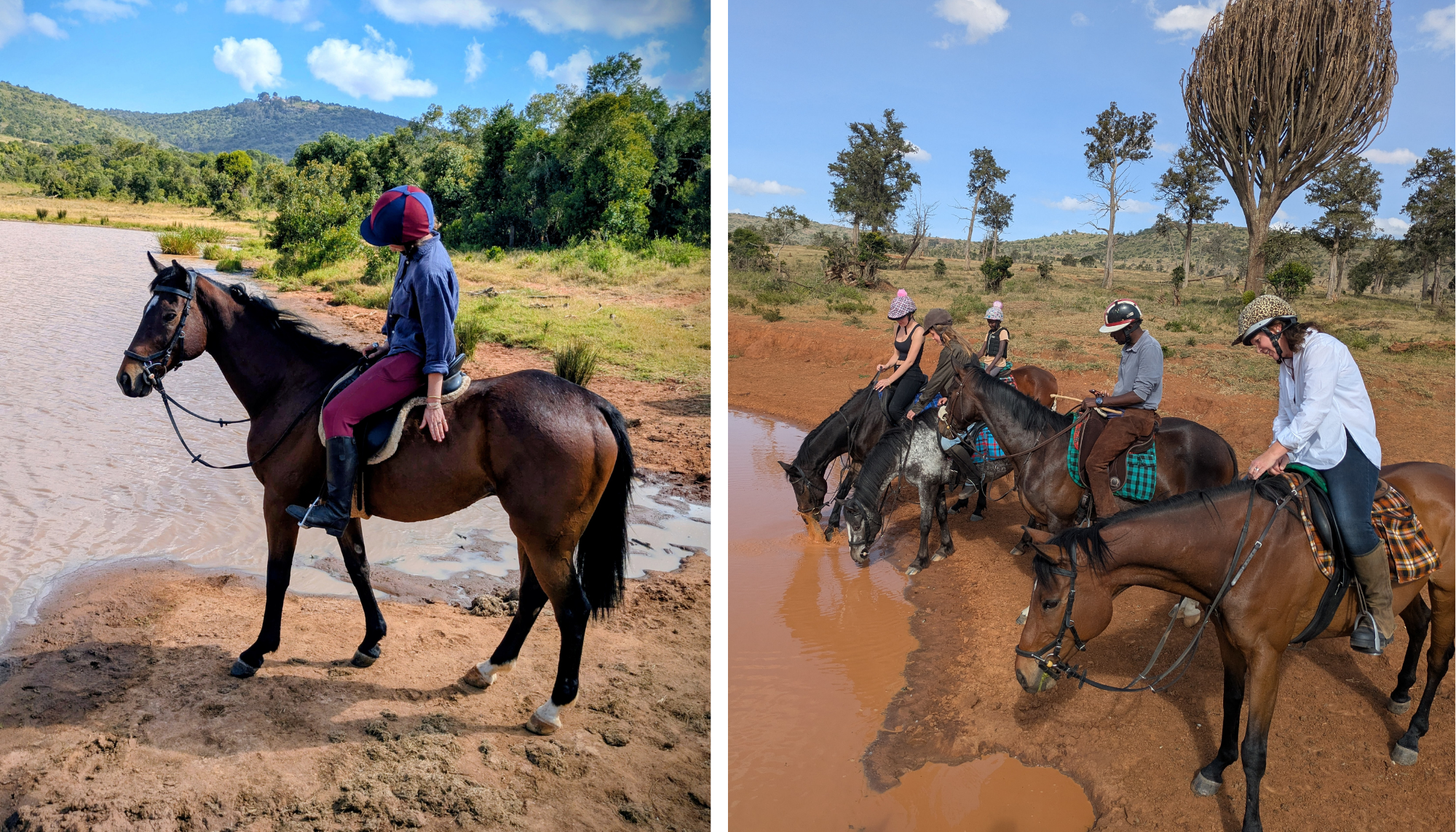
Horse Riding in the Lolldaiga Hills: The Wildest Way to See Laikipia
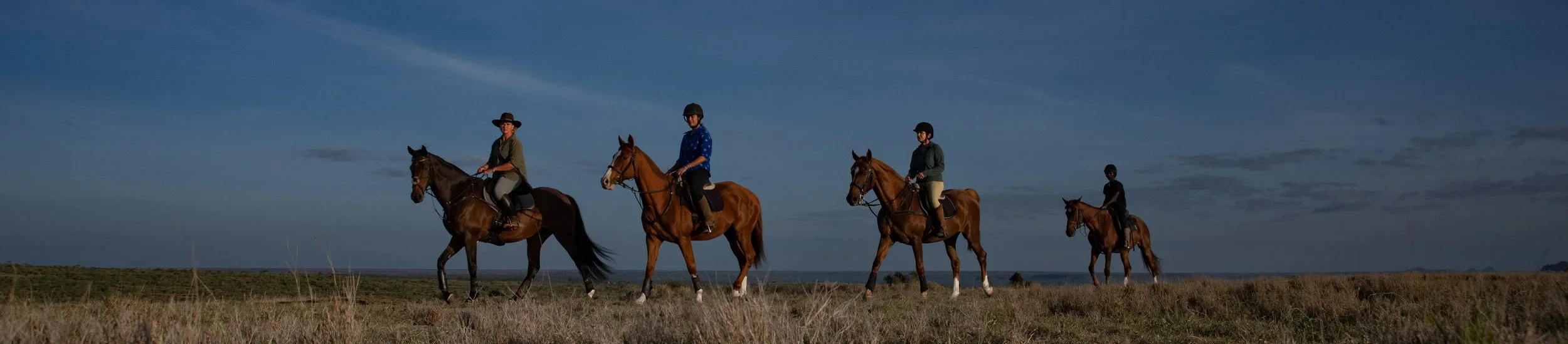
There's a version of an African safari that most visitors never experience: no engine noise, no dust trail from a Land Rover, just the sound of hooves on volcanic soil and the wind moving through the acacia trees. At Moon's Camp, on the southern slopes of the Lolldaiga Hills in Laikipia, Kenya, horse riding doesn’t just have to be an add-on activity - it's one of the best ways to see this landscape and its wildlife up close.
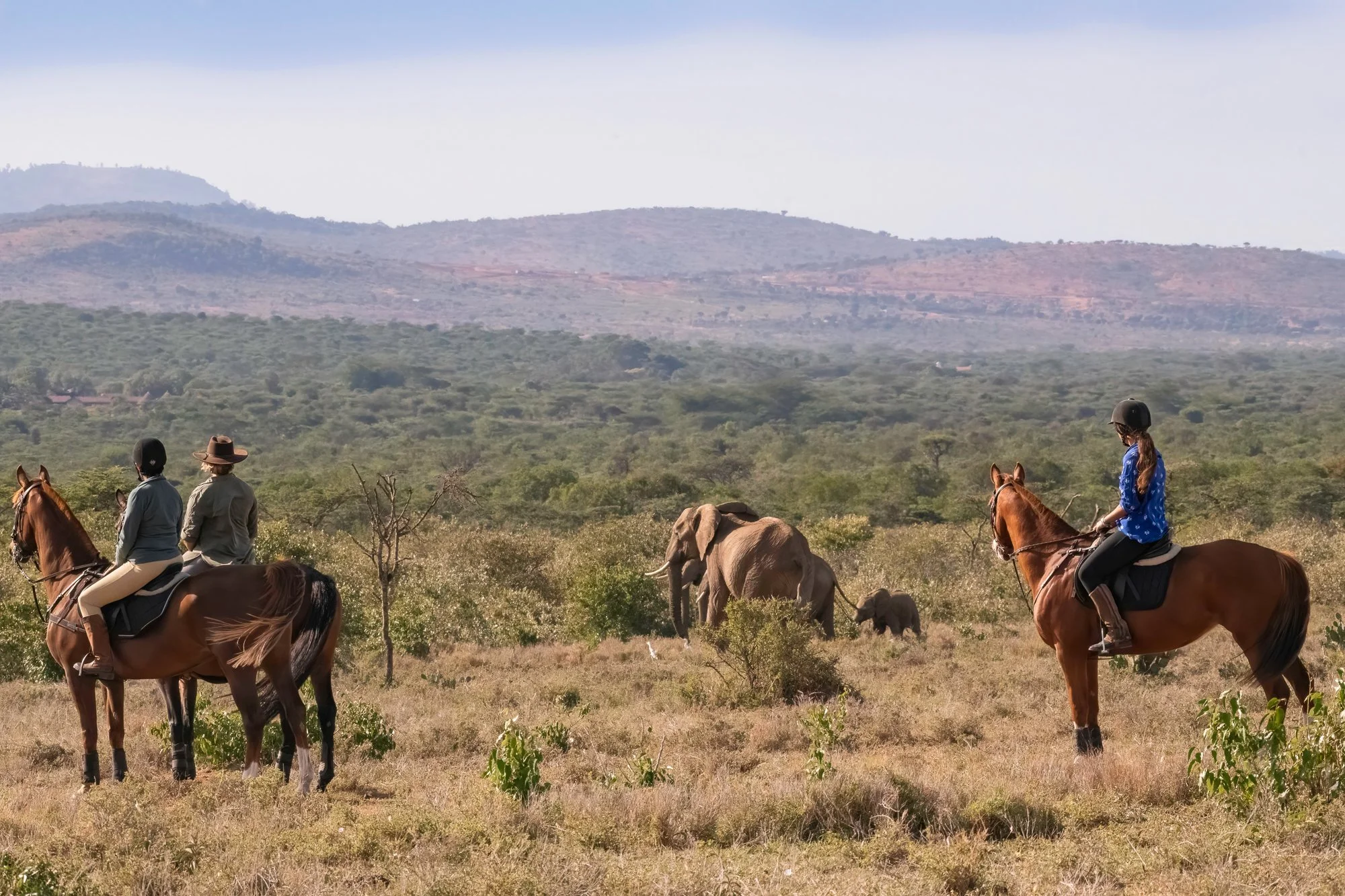
Why ride instead of drive
Horses change the terms of engagement with wildlife. Game vehicles announce themselves with engine noise and diesel fumes long before they arrive; animals hear them coming and often move off. A horse, by contrast, reads as just another herbivore on the landscape. Zebra, eland, giraffe, and buffalo will often let a quiet, well-handled horse approach far closer than any vehicle could get.
The Lolldaiga Hills themselves are part of the draw: a rolling conservancy of open grassland, rocky outcrops, riverine forest, and volcanic caves, all sitting in the shadow of Mount Kenya. Riding here means covering ground a vehicle can't reach and seeing the topography change hour by hour - savannah opening into forest, forest giving way to rock and hill.
Who This Is For: You Need to Be a Confident Rider
This isn't a nose-to-tail pony trek. Riding at Lolldaiga is done at a fast pace across genuinely wild terrain - open canter across grassland, uneven ground, sudden stops if wildlife is close, and in places, jumps over fallen logs, ditches, and low obstacles as part of the natural route. Guests should be capable at walk, trot, canter and gallop, and comfortable jumping small natural obstacles, before booking.
This matters for two reasons: safety, since horses share this landscape with genuinely dangerous game, and enjoyment, since a rider who's uneasy in the saddle won't get the full experience the terrain offers. The camp and its riding partners assess experience level in advance so horses and routes can be matched properly - which is exactly why riding needs to be arranged at the booking stage, not requested once you've arrived. Horses, guides, and routes are set up ahead of the trip; it isn't something that can be improvised last-minute.
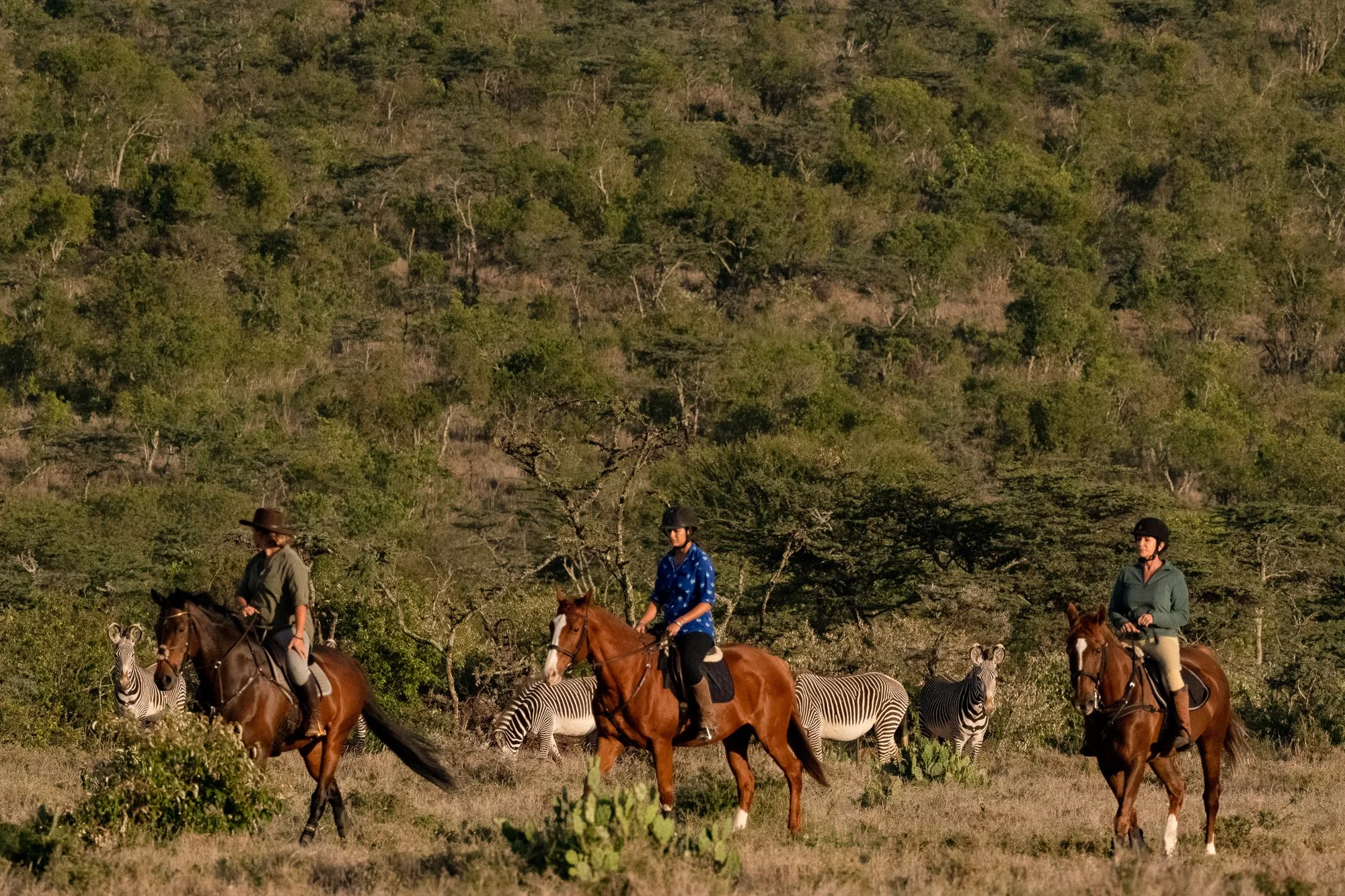
The Rides on Offer
Options range from a few hours in the saddle to a full overnight adventure:
Full-day rides through the conservancy, often built around a bush lunch - riding out to a scenic spot where a table is already laid under a tree, then riding back or continuing on.
The fly camp ride - an overnight expedition, riding out across the conservancy to a remote fly camp, sleeping out under canvas, and riding back the next day. Up to five hours in the saddle across two days, and about as far from a conventional safari as it gets.
Trusted Outfitters
Moon's Camp works with specialist riding partners who know this landscape and its horses well. Saddlebags Adventures, run by Laikipia-raised horsewomen, brings horses schooled specifically for bush conditions and matched carefully to each rider's ability. Everything Altitude, based at the foot of Mount Kenya near Nanyuki, specialises in preparing riders for African bush conditions and running tailored riding safaris with experienced partners across the Laikipia Plateau.
Horse riding safaris at Lolldaiga start from around $500 per day, depending on ride length, group size, and whether it includes extras like a bush lunch or fly camp night. Because horses and experienced guides need to be arranged in advance, riding must be booked at the time you book your stay - it isn't something that can be added once you're on the ground at Moon's Camp.
The Takeaway
If you can ride confidently and want to see Laikipia the way it was explored long before Land Rovers existed, horse riding at Lolldaiga Hills is one of the most rewarding ways to experience an African safari - closer to wildlife, deeper into the landscape, and entirely without an engine. Just remember to put it on the itinerary early.